
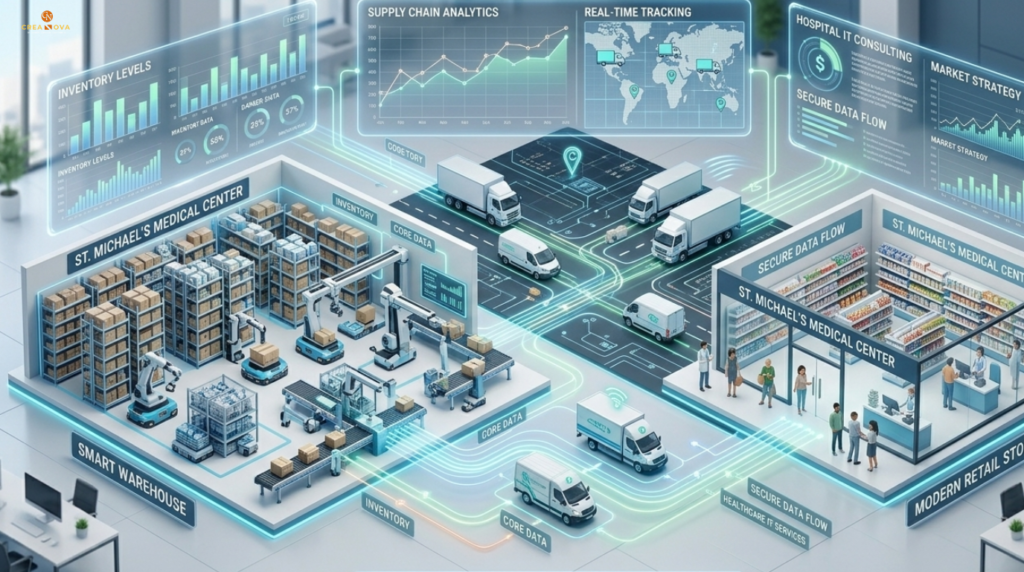
While most retailers focus on customer-facing technology, the companies gaining competitive advantage in 2026 are those that have mastered their supply chain operations through intelligent software solutions. Managing inventory, suppliers, and logistics manually leaves retail businesses vulnerable to stockouts, overstocking, and margin erosion that can devastate profitability. Modern supply chain management software for retail businesses can reduce inventory holding costs by up to 30% while improving customer satisfaction through better stock availability. This comprehensive guide will walk you through the essential features, top software options, and implementation strategies that successful retailers are using to transform their operations. By the end, you’ll have a clear roadmap for selecting and deploying the right solution to streamline your retail supply chain.
Key Takeaways
- Modern supply chain management software integrates inventory management, demand forecasting, and supplier coordination in a single platform.
- Cloud-based solutions offer better scalability and real-time visibility compared to legacy on-premise systems.
- Successful implementation requires proper data migration, staff training, and phased rollout strategies.
- The right software can reduce operational costs while improving customer satisfaction through better stock management.
Essential Features in Retail Supply Chain Software
The most effective supply chain management software for retail businesses combines inventory optimization, demand forecasting, and supplier management in an integrated platform. When evaluating solutions, retailers must prioritize features that directly impact their operational efficiency and customer satisfaction.
Real-time inventory tracking forms the foundation of any robust supply chain system. This capability allows retailers to monitor stock levels across multiple locations, automatically trigger reorders, and prevent costly stockouts. Advanced systems provide granular visibility down to individual SKU performance, seasonal trends, and slow-moving inventory identification.
Demand forecasting represents another critical component that separates basic inventory systems from comprehensive supply chain solutions. Modern platforms leverage machine learning algorithms to analyze historical sales data, seasonal patterns, and external factors like promotions or market trends. This predictive capability helps retailers maintain optimal stock levels while minimizing excess inventory.
Supplier relationship management features streamline vendor communications, track performance metrics, and automate purchase order processes. The best systems integrate directly with supplier portals, enabling seamless data exchange and reducing manual administrative tasks that often lead to errors.
Integration capabilities cannot be overlooked when selecting supply chain software. Your chosen solution should connect seamlessly with existing point-of-sale systems, e-commerce platforms, and accounting software. As highlighted in our creanova.in blog, successful digital transformation requires systems that work together rather than creating additional data silos.
Mobile Access and Multi-Location Support
Modern retail operations require mobile-friendly interfaces that allow managers to monitor inventory, approve purchases, and receive alerts from any location. Multi-location support becomes essential for retailers operating multiple stores, warehouses, or distribution centers, providing centralized visibility across the entire network.
Top Supply Chain Management Solutions for Retailers
The retail supply chain software market offers solutions ranging from enterprise-level platforms to specialized tools for specific business sizes and industries. Understanding the strengths and limitations of leading providers helps retailers make informed decisions based on their unique requirements.
Enterprise-level solutions like SAP Supply Chain Management and Oracle SCM Cloud provide comprehensive functionality for large retailers with complex operations. These platforms excel in handling multiple product lines, international suppliers, and sophisticated demand planning requirements. However, they typically require significant implementation resources and may be overpowered for smaller retailers.
Mid-market solutions such as NetSuite and Dynamics 365 Supply Chain Management offer balanced functionality suitable for growing retailers. These platforms provide essential supply chain features while maintaining reasonable implementation costs and complexity levels. They often include built-in e-commerce integration and financial management capabilities.
Specialized retail solutions like Brightpearl, Cin7, and TradeGecko focus specifically on retail and wholesale operations. According to Gartner’s supply chain research, these industry-specific platforms often provide faster implementation times and better out-of-the-box functionality for typical retail workflows.
Cloud-based platforms have gained significant traction due to their scalability, automatic updates, and lower upfront costs. Most leading solutions now offer cloud deployment options, eliminating the need for extensive IT infrastructure while providing access to the latest features and security updates.
Comparison Factors to Consider
When comparing solutions, evaluate each platform’s pricing structure, including both software licenses and implementation costs. Consider the learning curve for your team, available support resources, and the vendor’s track record with similar retail businesses. Integration capabilities with your existing systems should heavily influence your decision, as data connectivity often determines implementation success.
Implementation Strategy and Best Practices
Successful supply chain software implementation requires a phased approach that prioritizes data accuracy, staff training, and gradual system adoption. Most implementation failures stem from attempting to deploy too much functionality simultaneously rather than building competency progressively.
The preparation phase involves auditing your current processes, cleaning existing data, and establishing clear project timelines. Data migration represents one of the most critical steps, as inaccurate product information, supplier details, or historical sales data can undermine system effectiveness from day one.
Staff training should begin early in the implementation process, focusing on core users who will manage daily operations. Effective training programs combine formal instruction with hands-on practice using real company data. Consider appointing internal champions who can provide ongoing support as team members adapt to new workflows.
Many retailers benefit from working with implementation partners who specialize in supply chain software deployments. These experts can accelerate the process, help avoid common pitfalls, and ensure proper system configuration. When evaluating our services, we emphasize the importance of selecting partners with proven retail industry experience.
Testing and validation phases should simulate real-world scenarios using actual inventory data and supplier relationships. This approach helps identify configuration issues before they impact daily operations and builds confidence among staff members who will rely on the system.
Change Management Considerations
Organizational change management often determines implementation success more than technical factors. Communicate the benefits clearly to all stakeholders, address concerns proactively, and celebrate early wins to build momentum. Establish feedback mechanisms that allow users to report issues and suggest improvements during the transition period.
Cost Analysis and ROI Considerations
Understanding the total cost of ownership for supply chain management software helps retailers budget appropriately and set realistic ROI expectations. Costs extend beyond initial software licenses to include implementation, training, ongoing support, and potential system integrations.
Software licensing costs typically range from subscription fees for cloud-based solutions to one-time purchases for on-premise systems. Cloud solutions often provide more predictable monthly or annual costs, while on-premise systems may require larger upfront investments but potentially lower long-term expenses.
Implementation costs vary significantly based on system complexity, data migration requirements, and customization needs. According to Deloitte’s supply chain insights, retailers should budget implementation costs at 1.5 to 3 times the annual software licensing fees for comprehensive deployments.
Return on investment calculations should factor in inventory reduction benefits, labor savings from automation, improved supplier terms through better visibility, and reduced stockout costs. Many retailers achieve payback periods of 12 to 18 months through improved inventory turnover and operational efficiency gains.
Hidden costs often include data integration with existing systems, additional hardware requirements, and ongoing customization needs as business requirements evolve. Factor these potential expenses into your budget planning to avoid surprises during implementation.
Measuring Success Metrics
Establish baseline metrics before implementation to measure improvement accurately. Key performance indicators typically include inventory turnover rates, stockout frequency, order fulfillment accuracy, and supplier performance metrics. Regular monitoring helps justify the investment and identify areas for further optimization.
Future Trends and Technology Integration
The supply chain technology landscape continues evolving rapidly, with artificial intelligence, Internet of Things sensors, and blockchain technology creating new possibilities for retail operations. Understanding these trends helps retailers select solutions positioned for future growth and integration opportunities.
Artificial intelligence capabilities are becoming standard features in modern supply chain platforms, enabling more accurate demand forecasting and automated decision-making. Machine learning algorithms analyze vast datasets to identify patterns that human analysts might miss, leading to better inventory optimization and supplier selection decisions.
Internet of Things integration allows real-time monitoring of inventory conditions, shipping status, and equipment performance. Smart sensors can track temperature-sensitive products, monitor warehouse conditions, and provide automated alerts when intervention is needed.
Blockchain technology promises enhanced supply chain transparency and traceability, particularly valuable for retailers dealing with regulated products or sustainability requirements. While still emerging, blockchain integration may become essential for proving product authenticity and origin.
Sustainability reporting features are gaining importance as consumers and regulators demand greater environmental accountability. Modern supply chain systems increasingly include carbon footprint tracking, sustainable supplier scorecards, and waste reduction analytics.
Mobile-first design continues driving user interface improvements, with voice-activated controls and augmented reality features beginning to appear in warehouse management applications. These innovations can improve efficiency and reduce training requirements for frontline workers.
For retailers considering their digital transformation journey, partnering with experienced implementation specialists ensures access to the latest technology trends and best practices. Feel free to contact us for guidance on selecting and implementing the right supply chain management solution for your retail business.
Frequently Asked Questions
How long does it take to implement supply chain management software for retail?
Implementation typically takes 3 to 6 months for mid-sized retailers, depending on system complexity and data migration requirements. Larger retailers with multiple locations may require 6 to 12 months for full deployment across all operations.
What is the average cost of supply chain management software for retail businesses?
Cloud-based solutions typically cost between $100 to $500 per user per month, while enterprise solutions can range from $50,000 to $500,000 annually. Implementation costs usually add 150% to 300% of the first-year software fees.
Can supply chain software integrate with existing retail POS systems?
Yes, most modern supply chain platforms offer integration capabilities with popular POS systems like Square, Shopify, and traditional retail systems. API connections enable real-time data synchronization between inventory and sales systems.
Which features are most important for small retail businesses?
Small retailers should prioritize inventory tracking, automated reorder points, basic demand forecasting, and supplier management features. Multi-channel integration and mobile access provide additional value for growing businesses.
How does supply chain software improve retail profitability?
The software reduces inventory holding costs through better demand forecasting, minimizes stockouts that lead to lost sales, automates manual processes to reduce labor costs, and provides data insights for better supplier negotiations and pricing decisions.
Implementing the right supply chain management software can transform your retail operations, but choosing the wrong solution or poor implementation can waste valuable time and resources.
We believe in transforming ideas into reality. Our team of experts specializes in web development, social media management, content strategy, and AI-powered photo and video creation, ensuring your brand stands out in the digital space.