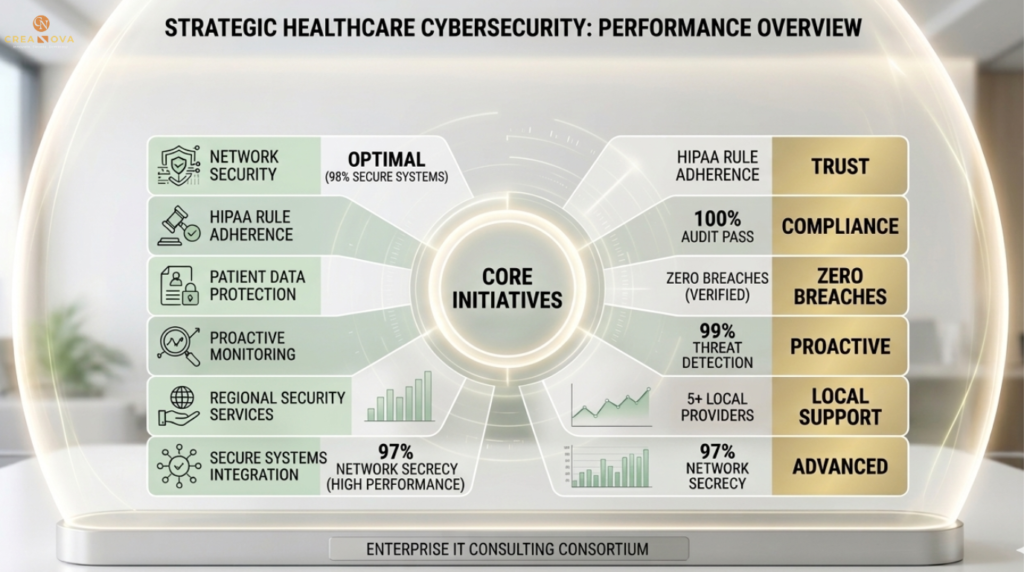
Healthcare organizations experience cyber attacks every 39 seconds, yet most medical practices still rely on generic IT support that lacks specialized healthcare security expertise. Finding qualified local healthcare cybersecurity specialists who understand both HIPAA requirements and emerging threats has become critical for medical practices of all sizes. The right specialist can reduce your security vulnerabilities by up to 95% while ensuring seamless compliance with healthcare regulations. This comprehensive guide will show you exactly how to identify, evaluate, and select the best local healthcare cybersecurity specialists for your medical practice. You’ll discover the specific questions to ask, red flags to avoid, and insider strategies that will save you thousands while protecting your patients’ sensitive data.
Key Takeaways
- Local healthcare cybersecurity specialists provide on-site support and understand regional compliance requirements better than remote providers.
- Qualified specialists must hold healthcare-specific certifications like HCISPP and demonstrate proven HIPAA compliance experience.
- The average cost for comprehensive healthcare cybersecurity services ranges from $3,000 to $15,000 monthly depending on practice size and complexity.
- Implementation typically takes 30-90 days and requires staff training, system audits, and policy documentation updates.
What Healthcare Cybersecurity Specialists Do
Healthcare cybersecurity specialists focus exclusively on protecting medical practices from cyber threats while maintaining HIPAA compliance and operational efficiency. Unlike general IT security providers, these specialists understand the unique vulnerabilities in electronic health records (EHR) systems, medical devices, and healthcare workflows.
The most effective healthcare cybersecurity approach combines proactive threat monitoring with comprehensive staff training and incident response planning. Specialists conduct regular vulnerability assessments, implement multi-layered security controls, and establish protocols for handling potential breaches within the required timeframes.
Core services include risk assessments, security policy development, staff training programs, and 24/7 monitoring of your network infrastructure. Many specialists also provide business associate agreements (BAAs) and serve as your designated security officer for compliance purposes.
Modern healthcare cybersecurity extends beyond traditional network protection to include medical device security, cloud-based EHR protection, and secure communication systems. Specialists stay current with HHS HIPAA security requirements and emerging threats specific to healthcare environments.
Local specialists offer distinct advantages including on-site incident response, face-to-face staff training, and familiarity with regional healthcare networks and referral patterns. They can quickly assess your physical security measures and provide immediate support during security incidents.
How to Find Local Healthcare Cybersecurity Specialists
Start your search by consulting your local medical association and healthcare technology user groups, as these organizations often maintain vetted provider directories. Many state medical associations publish recommended vendor lists specifically for cybersecurity services.
Healthcare-specific certification bodies like (ISC)² Healthcare Information Security and Privacy Practitioner maintain directories of certified professionals in your area. These specialists have demonstrated expertise in healthcare-specific security challenges and regulatory requirements.
Contact your EHR vendor for referrals to certified security specialists familiar with your specific system. Most major EHR providers maintain partner networks of qualified cybersecurity professionals who specialize in their platforms.
Qualified healthcare cybersecurity specialists typically serve a 50-mile radius and maintain response times under 4 hours for critical incidents. This geographic limitation ensures they can provide on-site support when needed while maintaining deep knowledge of local healthcare infrastructure.
Network with other medical practice administrators in your area through healthcare management associations and local business groups. Personal recommendations from similar practices often yield the most reliable specialist referrals.
For comprehensive digital solutions that complement your cybersecurity efforts, explore our our services which include secure web development and digital infrastructure management for healthcare organizations.
Essential Evaluation Criteria for Healthcare Security Experts
Verify that potential specialists hold current healthcare-specific certifications including HCISPP, CISSP with healthcare focus, or Certified in Healthcare Compliance (CHC). These credentials demonstrate specialized knowledge beyond general cybersecurity expertise.
Request detailed case studies from similar medical practices, focusing on their approach to HIPAA compliance, incident response, and ongoing monitoring. Ask for references from practices of comparable size and specialty focus.
Healthcare cybersecurity specialists must demonstrate experience with your specific EHR system and medical devices to ensure comprehensive protection coverage. Each healthcare technology platform has unique security considerations that require specialized expertise.
Evaluate their incident response capabilities by reviewing their documented procedures, response time guarantees, and after-hours support availability. Ask about their experience handling actual healthcare data breaches and regulatory reporting requirements.
Assess their training programs for medical staff, as human error remains the leading cause of healthcare security incidents. Effective specialists provide regular, engaging training that addresses healthcare-specific scenarios and phishing attempts targeting medical practices.
Review their business associate agreement terms and professional liability insurance coverage. Healthcare cybersecurity specialists should carry minimum $2 million in cybersecurity liability coverage and provide comprehensive BAAs that meet current HIPAA requirements.
Cost Considerations and Budgeting Guidelines
Healthcare cybersecurity costs vary significantly based on practice size, complexity, and existing security infrastructure. Small practices (1-10 providers) typically invest $3,000-$6,000 monthly for comprehensive protection, while larger practices may require $10,000-$15,000 monthly.
Initial implementation costs include security assessments ($2,000-$5,000), policy development ($3,000-$8,000), and staff training programs ($1,000-$3,000). These one-time investments establish your security foundation and compliance documentation.
The average cost of a healthcare data breach exceeds $450,000, making cybersecurity investment significantly more cost-effective than breach remediation and regulatory penalties. Factor potential breach costs into your budgeting decisions when evaluating service levels.
Many specialists offer tiered service models allowing practices to start with essential protections and expand coverage over time. This approach helps manage cash flow while building comprehensive security incrementally.
Consider the total cost of ownership including reduced insurance premiums, avoided compliance penalties, and prevented productivity losses from security incidents. Many practices recover their cybersecurity investment through insurance discounts and improved operational efficiency.
Stay informed about the latest cybersecurity trends and cost-saving strategies by following our creanova.in blog where we regularly share insights on healthcare technology and digital security.
Implementation Process and Timeline Expectations
The typical implementation process begins with a comprehensive security risk assessment lasting 1-2 weeks, followed by policy development and system configuration over 2-4 weeks. Complete implementation usually requires 30-90 days depending on practice complexity and existing infrastructure.
Phase one involves documenting current security measures, identifying vulnerabilities, and establishing baseline security metrics. Specialists conduct thorough network scans, review existing policies, and assess staff security awareness levels.
Phase two focuses on implementing technical controls including firewalls, encryption, access controls, and monitoring systems. This phase often requires some system downtime and coordination with your EHR vendor and other technology partners.
Staff training constitutes a critical implementation component requiring 2-4 hours of initial training followed by ongoing quarterly updates. Effective training programs use healthcare-specific scenarios and interactive elements to ensure retention and compliance.
Successful healthcare cybersecurity implementation requires designated internal champions who coordinate with specialists and reinforce security practices daily. Assign specific staff members to serve as security liaisons and maintain ongoing communication with your specialist team.
Plan for gradual policy rollout with staff feedback periods to ensure new security measures don’t disrupt patient care workflows. The best specialists work closely with clinical staff to balance security requirements with operational efficiency.
Building a Long-term Security Partnership
Establish regular communication schedules with quarterly security reviews, monthly status reports, and immediate incident notifications. Consistent communication ensures your security posture adapts to evolving threats and practice changes.
Develop clear escalation procedures for different types of security incidents, from potential phishing attempts to suspected data breaches. Your specialist should provide 24/7 contact methods and guaranteed response times for each incident category.
Plan for annual security assessments and policy updates to address regulatory changes, new threats, and practice growth. Healthcare cybersecurity requirements evolve continuously, requiring proactive adaptation of your security measures.
Long-term partnerships with healthcare cybersecurity specialists reduce costs by up to 30% compared to project-based engagements while providing superior protection continuity. Specialists who understand your practice culture and workflows can provide more effective, efficient security management.
Include your cybersecurity specialist in major technology decisions, practice expansions, and policy changes that might affect security. Their expertise can prevent security gaps during transitions and ensure new systems integrate securely with existing infrastructure.
For ongoing support with digital transformation initiatives that complement your cybersecurity efforts, contact us to discuss how our comprehensive digital solutions can support your healthcare practice’s growth while maintaining security.
Frequently Asked Questions
How do I verify a healthcare cybersecurity specialist’s qualifications?
Check their healthcare-specific certifications like HCISPP or CISSP, verify their professional liability insurance coverage exceeds $2 million, and request references from at least three similar medical practices. Ensure they hold current certifications and maintain continuing education requirements.
What should I expect to pay for local healthcare cybersecurity services?
Comprehensive healthcare cybersecurity services typically cost $3,000-$15,000 monthly depending on practice size, with initial implementation ranging $6,000-$16,000. Small practices often start around $3,000 monthly while larger multi-location practices may invest $15,000 or more monthly for complete protection.
How long does it take to implement healthcare cybersecurity measures?
Complete implementation typically requires 30-90 days including risk assessment, policy development, technical controls installation, and staff training. The timeline varies based on practice size, existing infrastructure, and complexity of required security measures.
Can local specialists provide 24/7 monitoring and support?
Most qualified local healthcare cybersecurity specialists provide 24/7 monitoring through security operations centers and guarantee response times under 4 hours for critical incidents. They often partner with national monitoring services while maintaining local incident response capabilities.
What makes healthcare cybersecurity different from general IT security?
Healthcare cybersecurity requires specialized knowledge of HIPAA requirements, medical device security, EHR vulnerabilities, and healthcare workflows that general IT security providers lack. Healthcare specialists understand regulatory reporting requirements and patient care continuity needs during security incidents.
Protecting your healthcare practice from cyber threats requires specialized expertise that goes beyond general IT support.
We believe in transforming ideas into reality. Our team of experts specializes in web development, social media management, content strategy, and AI-powered photo and video creation, ensuring your brand stands out in the digital space.